Flash Flood & Cloudburst Alerts in Himachal - What Tourists Should Know Before Booking a Trip This Monsoon
Cloudburst and flash flood are two words that show up constantly in Himachal monsoon news, but most travel blogs never actually explain what they mean or what to do about them. If you're planning a trip between June and September, understanding these terms properly - not just seeing them as scary headlines - will help you make a genuinely safer, better-informed booking decision.
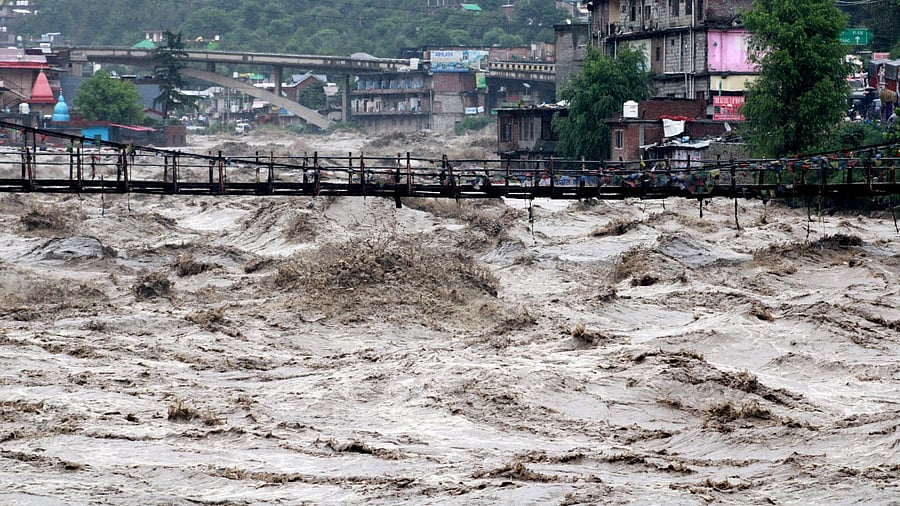
What Actually Is a Cloudburst?
A cloudburst is an extremely
intense burst of rainfall concentrated over a small area in a very short time -
often more than 100mm within an hour. In flat terrain this would simply cause
heavy waterlogging. In steep Himalayan valleys, that same volume of water gets
funneled down narrow gorges within minutes, turning quiet streams into
destructive torrents almost without warning. This is what makes cloudbursts so
much more dangerous in Himachal than an ordinary heavy rain day.
One especially important detail
from disaster researchers: most cloudbursts strike in the early hours of the
morning or around midnight, when people are asleep and least prepared to
react quickly. This single fact is why campsites and homestays right next to
riverbeds carry real risk during monsoon, regardless of how calm the weather
looks at sunset.
Understanding IMD's Color-Coded Alerts
The India Meteorological
Department uses a four-level color-coded
warning system - green, yellow, orange, and red - to communicate how severe
an approaching weather event is expected to be:
●
Green: No significant warning; normal travel
conditions.
●
Yellow: Be aware. Watch conditions and stay updated,
but travel is generally still reasonable with normal caution.
●
Orange: Be prepared. Significant disruption is likely -
reconsider non-essential travel to the specific alerted districts and avoid
remote or river-adjacent routes.
●
Red: Take action. This is the highest alert level,
signaling potential for severe, life-threatening conditions. Authorities
typically advise against all non-essential travel in the affected districts.
This isn't a hypothetical scale
- it's actively in use right now. In July 2026, IMD
escalated an alert to a red warning across five districts (Chamba, Kangra,
Kullu, Mandi, and Sirmaur), with officials explicitly stating that
cloudburst-like events could not be ruled out in the high-altitude zones, and
urging residents and tourists to avoid all non-essential travel during that
window.
A Real Recent Example: Why This Isn't Just Caution for Caution's Sake
This kind of alert isn't
abstract. In a widely reported incident, flash
floods triggered by cloudbursts swept through Kullu district's Manikaran
valley, stranding tourist vehicles and leaving several people missing,
prompting the district administration to issue an immediate tourist advisory
alongside the MeT department's warning. It's a clear reminder that these
warnings translate into real, on-the-ground danger for travelers who happen to
be in the wrong valley at the wrong time.
What Tourists Should Actually Do With This Information
●
Before booking: Check the season. If your dates fall in
peak monsoon (roughly mid-July to late August), ask your tour operator how they
monitor conditions and what their rescheduling policy looks like.
●
A week before travel: Search for your specific
districts plus "IMD warning" to see the current alert level, rather
than relying on a generic monsoon forecast.
●
During your trip: If an orange or red alert is issued
for your district, avoid non-essential travel, stay away from riverbanks and
low-lying areas, and follow local administration instructions rather than
trying to push through to your next destination on schedule.
●
Where you stay matters: Ask specifically whether your
accommodation is riverside or on higher ground, especially in Kullu, Mandi, and
Chamba districts, which see the most frequent flash-flood activity.
●
Have a buffer day: A trip with zero flexibility forces
difficult choices when a warning is issued mid-trip. Building in one unplanned
day gives you room to simply wait out a red-alert window safely.
The Bottom Line
A cloudburst warning isn't the
region telling you to cancel your trip outright - it's telling you exactly when
and where to be more careful. Understanding the alert system, checking it close
to your travel dates rather than weeks ahead, and avoiding river-adjacent stays
during active warnings turns a scary headline into a manageable, well-informed
travel decision.
At Royal Rover Holiday, we
actively track IMD alerts and district advisories for every ongoing trip and
adjust routes, stays, or schedules the moment a warning is issued - so our
travelers aren't finding out about a flash-flood risk the hard way. If you're
planning a monsoon-season trip to Himachal, talk to us first, and we'll help
you plan around the risk rather than into it.


Comments
Post a Comment